EN






The consumer-grade gasket that fails inside a LiDAR housing
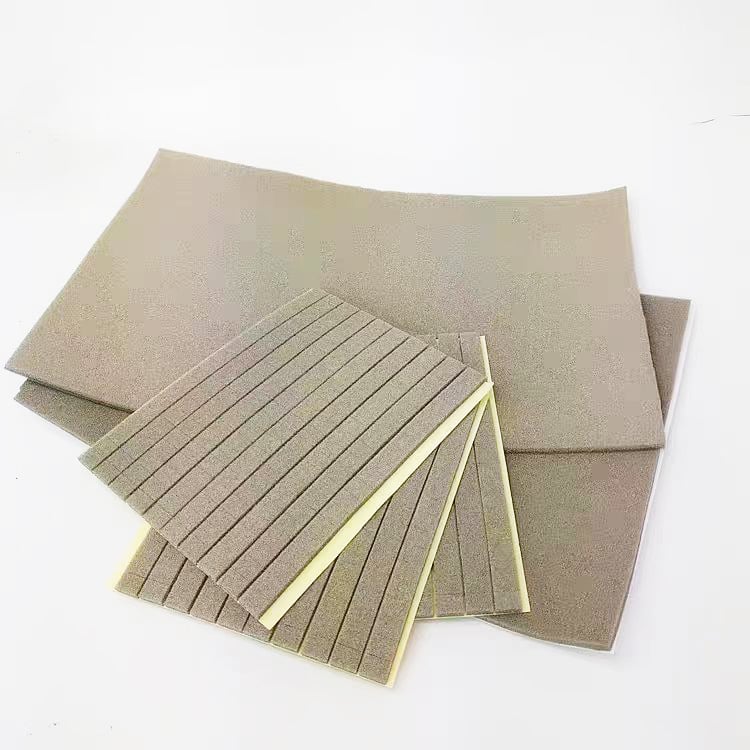
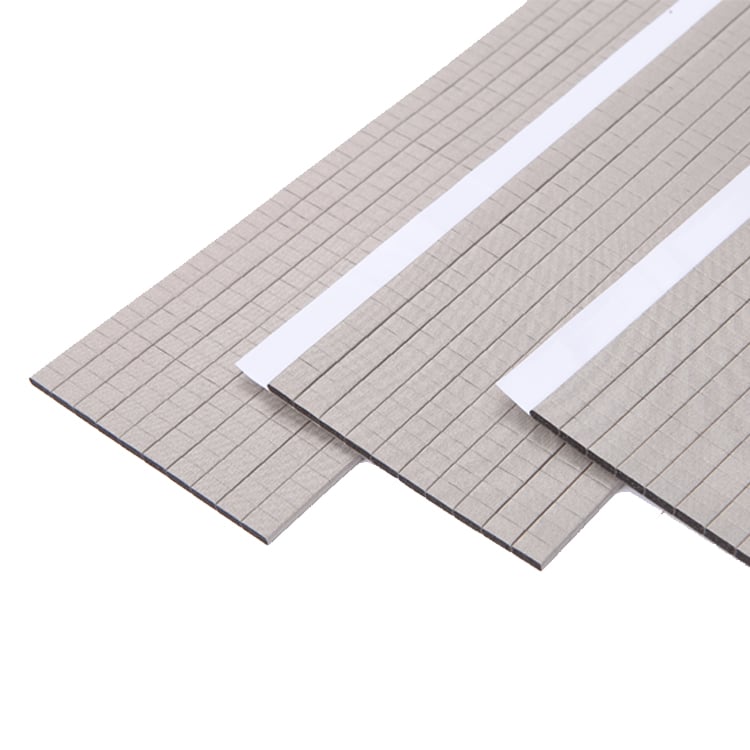
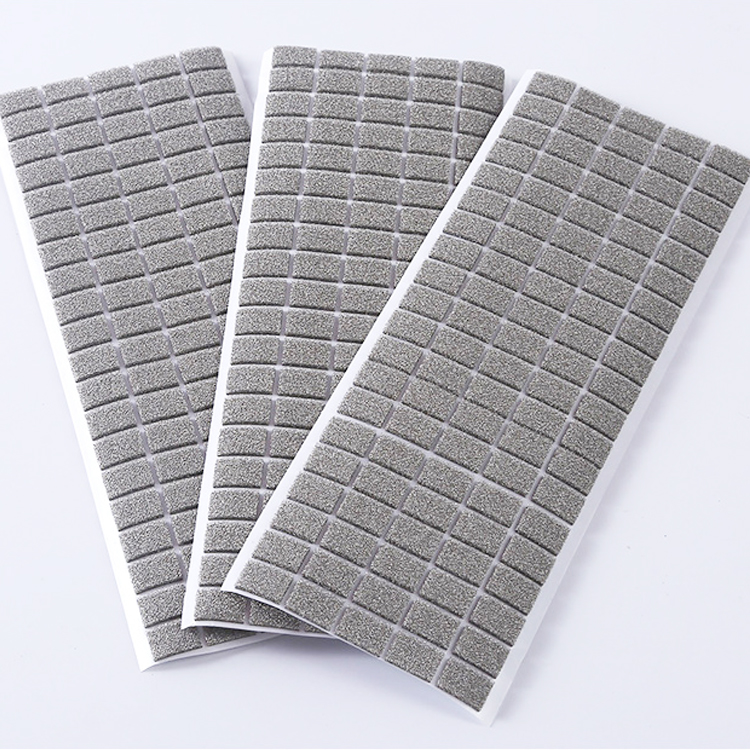
Put a consumer-grade conductive foam gasket in a LiDAR housing and it will fail. Not in a week, not in a month — but inside eighteen months it'll either harden in the under-hood heat, crack through a Harbin winter, or lose its ground path after a wash cycle douses the connector with washer fluid. Automotive electronic gaskets live in a different world: −40 °C cold soak, 125 °C under-hood heat, random vibration profiles along ISO 16750, and a fifteen-year warranty attached. The conductive composite sponge foam on this page is the variant we developed for that world — a silicone-foam-core, fabric-over-foam build, die-cut to ADAS and powertrain enclosure drawings, and released under our IATF 16949 quality system.
This isn't the budget urethane carbon sponge we sell for network cabinets. That part tops out at 80 °C and survives fine in a climate-controlled rack. Put it in a wheel arch or a frunk and it comes back.
What "composite" actually means
It's a three-layer build, not a single material pretending to be three things. A closed-cell silicone foam core (the damping and sealing part) is wrapped in a Ni/Cu conductive fabric (the EMI and ESD part), with a temperature-rated conductive PSA on the back (the attachment part). Each layer exists because the application demands it:
- Urethane foam hardens at −40 °C and softens at 125 °C.
- Bare carbon foam doesn't seal against water.
- A plain fabric doesn't damp vibration.
The composite construction lets us tune compression set, shielding effectiveness and fluid resistance independently instead of compromising on one material that's mediocre at all three jobs.
Three functions in one die-cut part
- EMI / ESD shielding for ADAS domains. A LiDAR, a mmWave radar, an 8-megapixel camera module — these sit in enclosures that have to stay electrically quiet. The Ni/Cu wrap delivers 60 dB from 10 MHz to 3 GHz, so the sensor's own radar chirp doesn't leak into the cabin, and external switching noise doesn't walk into the receiver.
- Environmental seal against dust and water. The closed-cell silicone core means the same die-cut outline doubles as an IP-rated gasket on the housing flange. You don't spec a separate rubber grommet and a separate grounding strip; one part does both, which is one less BOM line and one less tolerance stack.
- Vibration damping. This is the function most shielding gaskets don't do. Road vibration at 5–500 Hz will walk a rigid shield can off its mount; a foam core that compresses 20–30% absorbs that energy and holds the optical axis aligned. On a LiDAR, that's the difference between a sensor that needs recalibration every 10,000 km and one that doesn't.
Where this part actually ships
We'll skip the generic "transportation industry" copy. These are the four jobs we quote on every week:
- LiDAR, radar and camera module gap pads. Between the sensor housing and its bracket, or between the cover glass and the chassis. The foam has to hold alignment through vibration and temperature without loading the optics.
- On-board charger (OBC) and DC-DC converter enclosures. Often mounted in the frunk or under the rear seat, these boxes see 105 °C continuous and need both EMI containment for the switching stage and a seal against road dust and splash.
- Battery module and BMS grounding. Along the module housing flange, between the BMS board and the enclosure. The foam bleeds static and seals against condensation, without creating an unwanted thermal bridge between cells and the case.
- HV connector and charging-inlet gaskets. Around motor-phase connectors and the DC fast-charge inlet, where the part has to survive coolant splashes and a high-vibration environment.
- ADAS domain controller sealing. The central compute box, usually cabin-mounted but still seeing wide temperature swings and fan-induced vibration.
When to step down to a cheaper build
We tell customers this on day one, because it saves both of us a qualification cycle:
- If your gap is under 0.5 mm and you don't need vibration damping, the SF series is thinner and cheaper.
- If you need 70 dB above 6 GHz, the full FOF with Ni/Cu taffeta is the build.
- If your application is a cabin consumer device and the silicone-core price is overkill, the urethane carbon sponge is what we'd quote.
This product exists for the under-hood and ADAS jobs where those cheaper builds come back.
Why Johan for automotive
We've been an IATF 16949 shop for years, and in 2024 we expanded our new-energy component capacity specifically because EV customer demand pulled us in. That means the documentation package isn't a translation exercise: PPAP Level 3, IMDS submission, material declarations, and lot-traceability records exist in English and are ready at sample stage, not at SOP.
We also convert this part in Dongguan, which means when your prototype fails vibration testing on a Tuesday, the engineer who set the foam density is on the call within the hour — not routed through three middlemen. Because we control the plating (Shandong magnetron sputtering), the coating (Hunan) and the die-cutting (Dongguan), we can tweak fabric finish, foam durometer and adhesive system independently. That's what automotive programs actually need when one customer wants a harder durometer and another wants lower compression set on the same outline.
Working with us
- Send us the housing drawing, the required IP rating, the vibration profile, and the operating temperature range. We'll recommend foam durometer and fabric build rather than just quoting the catalog.
- Standard thicknesses 1.0 / 2.0 / 3.0 / 5.0 mm; die-cut to your DXF. PPAP first articles typically leave Dongguan in 3–4 weeks.
- RoHS, REACH and ELV compliant; the part is formulated to resist common automotive fluids — ATF, coolant, washer fluid — within the published soak limits. Ask for the fluid compatibility matrix before qualification.
- Storage: 12 months at 18–26 °C, 45–65% RH, FIFO.
If your ADAS sensor or powertrain box is chewing through consumer-grade gaskets, send us the failed part. We'll tell you whether the problem is temperature, vibration, fluid, or all three — and we'll quote the silicone-core composite build that survives it, not the urethane catalog part that comes back in eighteen months.
Typical Values — Automotive-Grade Conductive Composite Sponge Foam
Representative values, not for specification purposes. Final build is application-specific.
Item |
Typical value |
Construction |
Closed-cell silicone foam core, Ni/Cu conductive fabric wrap, conductive PSA |
Core material |
Silicone (wide-temperature, fluid-resistant) |
Standard thicknesses |
1.0 / 2.0 / 3.0 / 5.0 mm (custom durometer on request) |
Surface resistance |
< 0.1 Ω / sq |
Shielding effectiveness |
60 dB (10 MHz – 3 GHz, typical) |
Compression set |
≤ 10% after 22 h at 125 °C |
Operating temperature |
−40 °C to 125 °C long-term |
Vibration profile |
Per ISO 16750-4, on request |
Quality system |
IATF 16949, ISO 9001, ISO 14001, QC 080000 |
Documentation |
PPAP Level 3, IMDS, material declarations available |
Compliance |
RoHS, REACH, ELV |
Stepping down: urethane carbon sponge for climate-controlled cabinet sealing, SF series for sub-0.5 mm gaps, full FOF for 70 dB shielding. Tell us the housing, the vibration profile and the temperature range — we'll match the build to the job.