EN


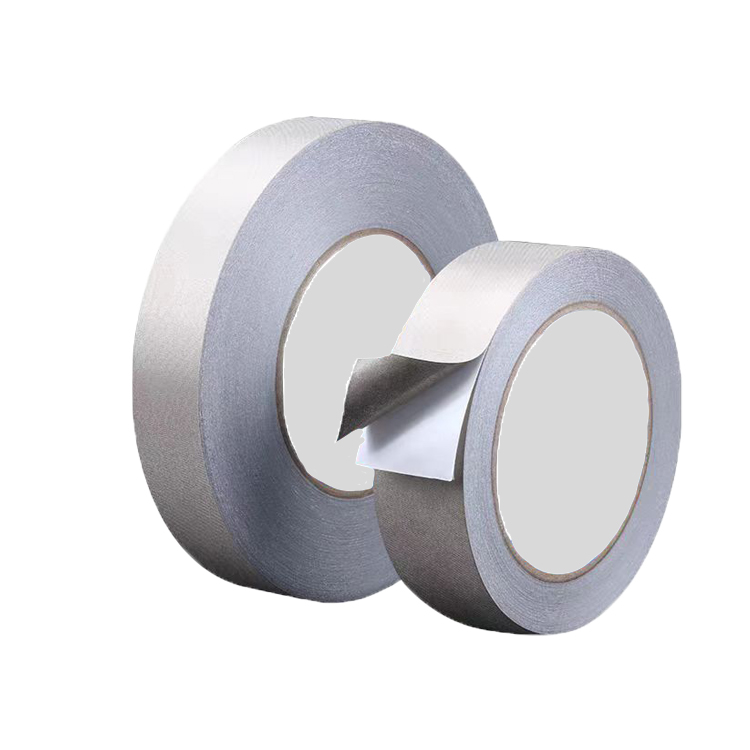





When the same gap has to block RF and stop vibration at the same time
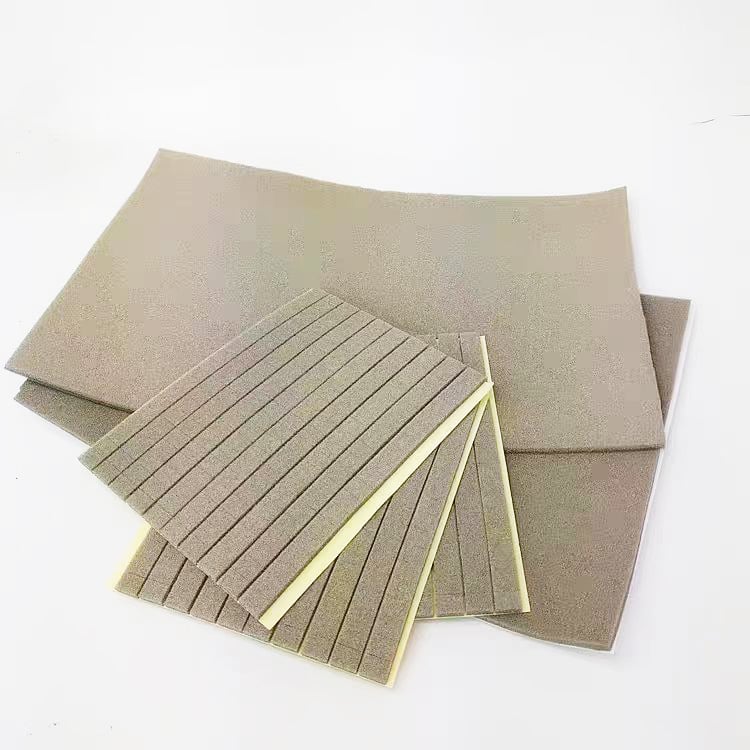
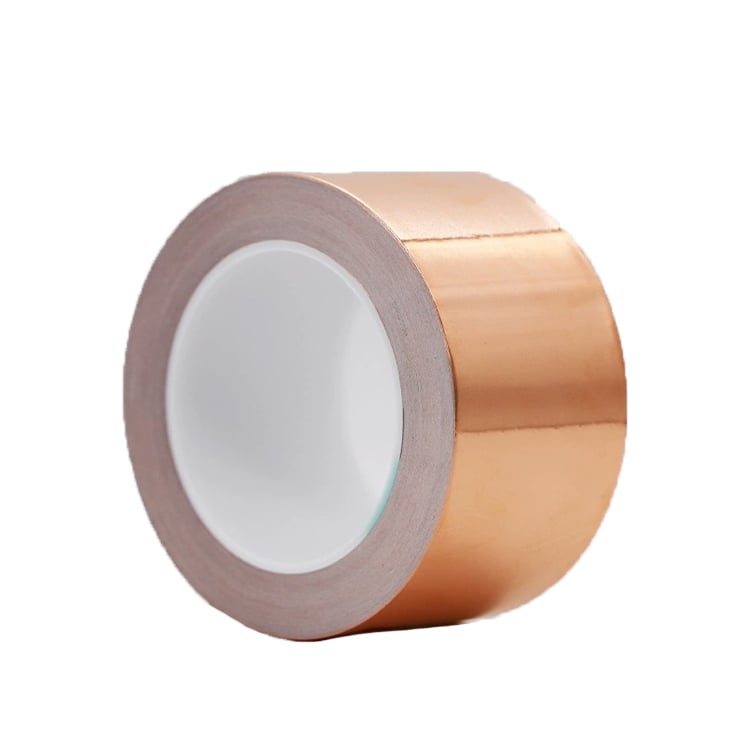
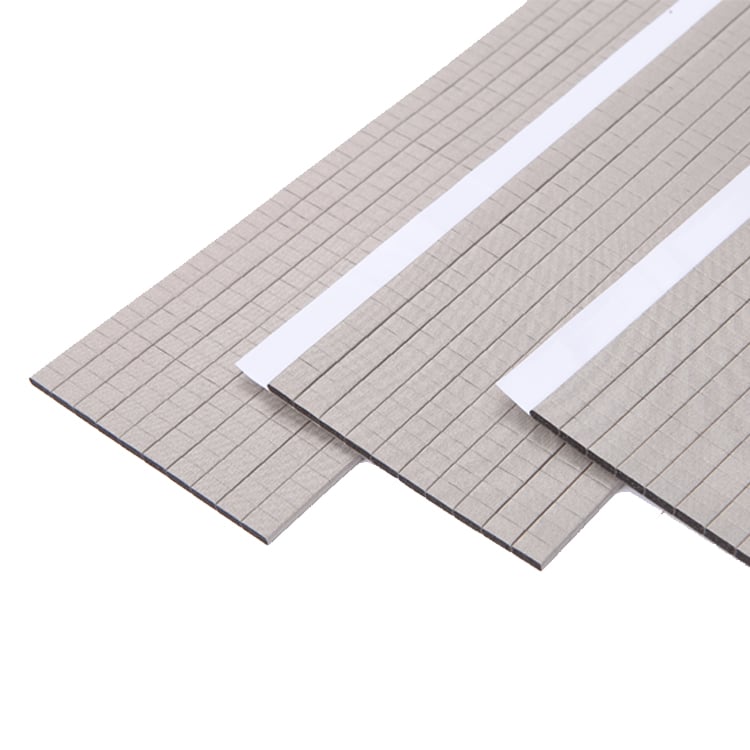
There's a class of enclosure where one gap has to do two jobs at once: block EMI and keep vibration from crossing. A camera module in a phone, a fan in a server, a speaker in a soundbar, an IIoT sensor bolted to a motor — in each case, a rigid metal shield grounds the RF but transmits the vibration straight through to the housing. A rubber gasket isolates the vibration but doesn't conduct. The conductive fabric over foam gasket tape on this page is the roll-stock version of our FOF material: Ni/Cu taffeta over urethane foam, conductive PSA on the back, slit to width and wound on a silicone release liner. You cut it with scissors on the line, wind it around a cable, or lay a strip down in a prototype before you commit to a die.
Why tape on a roll, not die-cut
Most of the FOF gaskets on our site ship as die-cut parts — custom outlines, registration tabs, 7–10 day lead time. That's the right answer at 100k units a month. It's the wrong answer when:
- You're prototyping a new enclosure and the outline changes every week.
- You're running a low-volume medical or industrial product where die tooling never pays back.
- You need to run a strip around an irregular perimeter that doesn't justify a custom die.
- A field service team needs to cut gasket stock on the bench, not wait for a replacement part number.
This tape is the roll-stock SKU. Same Ni/Cu taffeta, same urethane core, same 70 dB shielding from 10 MHz to 3 GHz — just on a roll you cut to length.
The vibration angle, honestly
The foam core isn't just a compressible spacer. It's an isolator. Put a 1.5 mm urethane strip between a camera module and its bracket and the OIS motor's ~200 Hz micro-vibration doesn't walk into the chassis — which is the difference between a video that looks steady and one that has a visible chassis-induced wobble. Same story on a fan: the foam absorbs the fan's audible vibration so the enclosure doesn't ring, while the conductive fabric keeps the fan frame grounded to chassis.
A solid metal shield would do the EMI job and transmit the vibration. A pure silicone gasket would isolate the vibration and not ground. The composite build is the compromise that actually works.
Where this roll-stock build ships
We'll skip the generic "aerospace, medical, defense" list. These are the four jobs we quote every week:
- Camera module isolation frames. Around phone, laptop and drone camera modules, where the foam both grounds the image-sensor EMI and dampens the OIS/AF motor vibration. We've shipped this build into consumer camera programs since the OIS era, when handset makers started asking us to soften the frame without losing the ground path.
- Fan and blower mounting. Between the fan frame and the chassis in servers, projectors and industrial PCs. The conductive PSA grounds the fan; the foam kills the audible buzz that otherwise turns into a chassis resonance.
- Speaker and microphone gaskets. Around speaker drivers and MEMS microphones, the foam seals acoustically and grounds the EMI that would otherwise show up as a buzz on the audio line. It's an acoustic gasket and a shield in one strip.
- IIoT and industrial sensor mounting. Sensors bolted to vibrating motors, pumps and conveyor lines, where the enclosure needs both EMI shielding against VFD noise and isolation from the machine vibration that would otherwise walk into the MEMS accelerometer.
- Prototype and low-volume enclosure sealing. Before you commit to a custom die, run a strip of this around the seam and see if it passes radiated emissions. It usually does, and it saves the four-week tooling loop when the design still isn't locked.
Why roll-stock beats die-cut in these jobs
- You can contour it around irregular shapes without a tool.
- You can change the width on the fly — 3 mm one run, 10 mm the next.
- Lead time is days, not weeks.
- When the design locks, we convert the same material to die-cut parts; you don't requalify a new foam density or a new fabric batch.
We'll also tell you when die-cut wins: at high volume, a die-cut outline with registration tabs beats a cut-by-hand strip every time. Don't run a roll on an SMT line at 500k units.
Why Johan
We wrap the taffeta in Dongguan and coat the PSA on our Hunan line, so the roll stock comes from the same process as our die-cut parts — not a converted third-party roll. That matters because the foam density on the roll matches the foam density on the die-cut part you eventually qualify, and the through-resistance test on a sample strip is the same test you'll run on the production lot. We've been making FOF since the 2017 foldable-phone program, which is the same line that now ships camera isolation strips and fan gaskets.
We're ISO 9001 / 14001 / QC 080000, and IATF 16949 if the same material ends up in a vehicle camera or a cabin fan.
Working with us
- Standard widths slit from 3 mm to 50 mm; standard lengths 10 / 50 / 100 m; foam thickness 1.0 / 1.5 / 2.0 / 3.0 / 5.0 mm.
- Send us the module outline, the vibration frequency you're trying to isolate, and the EMI band you're shielding against. We'll recommend foam durometer and width rather than just quoting the catalog.
- Sample rolls ship in 3–5 working days; production in 2–3 weeks.
- Storage: 12 months at 18–26 °C, 45–65% RH, FIFO. We pack on silicone release liner in static-shielding PE.
If you're prototyping a new enclosure, or you need a shielding-plus-isolation strip around a camera, fan or speaker, send us the module drawing. We'll send a sample roll so your mechanical team can run it on the actual product before you cut tooling — and when the design locks, we'll convert the same material to die-cut parts without a requalification.
Typical Values — FOF Gasket Tape on a Roll
Representative values, not for specification purposes.
Item |
Typical value |
Construction |
Ni/Cu polyester taffeta over urethane foam, conductive PSA backing |
Fabric thickness |
0.08 / 0.12 mm |
Foam thickness |
1.0 / 1.5 / 2.0 / 3.0 / 5.0 mm |
Standard slit widths |
3 mm – 50 mm |
Standard roll lengths |
10 / 50 / 100 m (custom on request) |
Surface resistance |
< 0.05 Ω / sq |
Shielding effectiveness |
70 dB (10 MHz – 3 GHz) |
Compression set |
≤ 10% after 22 h at 70 °C |
Operating temperature |
−20 °C to 80 °C long-term |
Adhesion to SUS |
≥ 12 N / 25 mm |
Compliance |
RoHS, REACH |
Stepping up: die-cut FOF outlines for high-volume production, SF series for sub-0.5 mm gaps, automotive silicone-core composite for −40 to 125 °C. Tell us the module, the vibration frequency and the volume — we'll recommend the format.